Saturday, April 5, 2014

Open Records Battles: A Story In Itself

Reporting on the reporting. 

While this may sound silly, it is often times extremely telling. Here's why: the way agencies respond to public records requests says a lot about the type of sources you're dealing with and the level of controversy contained in the information you're seeking.

Reluctance is key. If a government agency or program is reluctant to hand over public documents, it is a pretty good sign that they are leery about something in them being widely published.

By reporting your struggles to report, you as the news source are giving more power to the reader. 

A local example of this concept came out of The Des Moines Register this week. The story started when Worth County Deputies tased and killed Michael Zubrod, 39, in September. An internal investigation of the case was closed in December. The County Attorney determined there was no wrongdoing on the part of the deputies.

The Register is rightly looking to report further on the findings of the investigation. And that is where they have hit a wall. The Iowa Division of Criminal Investigation is refusing to provide reports and documents from the case. 

Here is where the register empowers its readers with the story in the story... 

Instead of carry out this battle silently and report what they can when they get it, they published this story last Monday. In it, The Register lays out the specifics of the lawsuit they have filed and even got comments from Governor Branstad in support of them obtaining the records. 

Government transparency: challenged.
Public interest: heightened.

Saturday, March 29, 2014

Do's and Don't's: Feature Story Visuals

Scott Sanborn leads into the video feature
on a local creator, Jim Rogers
KGAN recently broadcast a charming feature segment titled "Created in the Corridor" which serves as an opportunity to dissect use of visuals.
I've established some do's and don't's for this piece below.

DO's

-Detailed b-roll: the up-close shots fit with this precise craft.
-The walk-through: here the creator verbally and visually walks viewers through his work and the process of its creation and use.
-Involved interviewer: by placing Scott Sanborn in the shot, observing or demonstrating, from week to week, there becomes an audience recognition and trust.
-Up and about: avoiding the formal sit-down when their job has them on their feet more often than not, instead following them as they go, and interviewing along the way.
-In studio intro/outro: the anchor stand-up in front of a large screen with the segment's signature image mimics a professional 60 Minutes-style piece.

DON'T's

-Mmhm's: audible remarks such as "mmhm" and "okay" from the interviewer seem unprofessional and distract the flow of the piece.
-Interruption via editing: at times the subject's remarks are faded out to make way for the reporter's commentary. (I see this a lot in local news and to me it feels like both awkward, low-quality editing and rude execution to talk over the interviewees response. I would prefer the audio be cut off clean.)
-Misfit skyline: the segment visual looks the opening to "Fraiser." A New York skyline does not make me think of the Cedar Rapids/Iowa City Corridor.
-Cut-offs: the story's title as it appears on the website reads "Jim's instrument Ma..." - a little mistake that could detract online viewers.

Despite some don't's, I like this piece. It feels like a segment from a national magazine, but covers a local story.

Goal met: local station delivers high quality news about issues that pertain to me.

Tuesday, March 25, 2014

Local celebrity: the flip side of localize

Local news sources are constantly trying to localize national or international stories. This involves asking questions like: How does this affect our community? What local connections are there? How does this affect our wallets locally?

The opposite move is to highlight a local story that has become somewhat national.

KCRG's Sunday piece on a Dubuque photographer serves as an excellent example.

Mark Hirsch garnered worldwide attention via social media when he created a book from 365 days worth of iPhone photos of the same tree in his neighborhood.

And so begins the "local celebrity."

This type of story is successful for two reasons:

1. Bragging rights. Especially in small town Iowa, there is interest in the local celebrity. When people outside our community are interested in someone or something within it, we want to know about it. It's something community members can get behind and boast about. Connecting people to someone who feels like "one of us" cultivates local pride. And if you're the one to deliver the news, you get to be included in that positive feeling.

2. Feel good. Every newscast needs a feel-good piece to balance out harder hitters like statistics and murders. This format fits the bill perfectly. The positive vibe comes from it being worry-free and visually appealing. What's not to love about finding beauty in the simple things that surround our daily lives? KCRG managed a light and encouraging piece for Sunday broadcast.

This will most likely be the story people talk about at work on Monday morning.

Wednesday, March 5, 2014

NOT Breaking News

Tackling a pet peeve of many today... inappropriate use of the title "breaking news."

Knowing the appropriate priority with which to announce a story has a direct effect on credibility. When news sources overdramatize an issue, they risk "boy who cried wolf" syndrome.

Example: The Telegraph Herald shares the following story on Facebook with the lead-in "BREAKING NEWS."


While some citizens may find this news interesting, it fails to qualify as breaking news. The topic is lacking immediacy and importance. Store openings or closings bring about questions of how it will affect the local economy and job market. These are questions to ponder and pursue as follow-up but there is nothing absolutely pressing about answering them.

Breaking news on television is an interruption in regular coverage. If you're disrupting the norm and demanding viewer attention, your reason better be something both timely and pertinent.

Worthy of breaking news lead-in:
  • accidents (impacting traffic/caused fatalities/extensive collision) 
  • people are waiting to hear (ex: court decisions)
  • national importance
  • imminent danger to readers (ex: boil order)
  • deaths of prominent individuals
  • updates to an ongoing investigation
NOT worthy of breaking news lead-in:
  • celebrity news (unless you're an entertainment news source)
  • odd/human interest stories
  • topics that apply to few people
Eric Hutchinson, a successful pop singer, has begun his own personal campaign on this issue using Twitter. The target of his complaints is CNN. Hutchinson retweets stories and calls the news organization on overdramatization of story importance.

1/25/2014: "NOT BREAKING NEWS, CNN!!! RT @cnnbrk: Clif. elementary teacher allegedly laced food with pot at employee pot-luck dinner, police say."

1/19/2014: "NOT BREAKING NEWS, CNN!! RT @cnnbrk: Thieves with hammers make off about 65 Rolexes."

1/14/2014: "NOT BREAKING NEWS, CNN!!!!!!!!!!!! RT @cnnbrk: Authorities search pop star Justin Bieber's home in alleged egg-throwing incident."


Local news, take note.

Thursday, February 27, 2014

Missed Opportunities: Courier Coverage of Meskwaki Stabbing


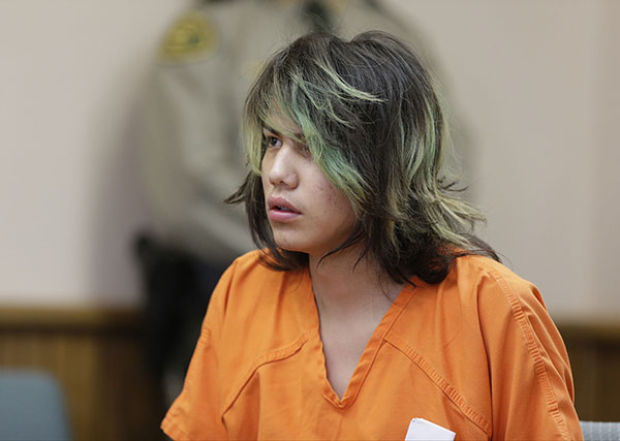
Jonathan Youngbear appears in court Tuesday. Photo by Jim Slosiarek.

The Waterloo-Cedar Falls Courier left some trails unexplored in its coverage of this week's Meskwaki murder case. Despite a collaborative reporting effort with KCRG-TV9 and The Gazette, questions - both simple and in-depth - remained unanswered. 

The story began Monday when a 911 call was made to report someone had been stabbed in a home located on the Meskwaki Settlement. The Courier tweeted out three updates as authorities arrived on the scene. After a press conference late Monday, it published a story with the following details:

  • Fatal stabbing prompted murder investigation
  • Victim: 17-year-old Severn Jefferson
  • Accused: 20-year-old Jonathan Youngbear
  • Stabbing occurred at Youngbear's home
  • Youngbear was being held in the Tama County Jail
This first story was fairly routine and covered the needed facts, although more detailed Twitter posts along the way could have gotten info to followers quicker. 

Problems arose with The Courier's next update. Tuesday's article covered Youngbear's initial court appearance and the presence of drugs in his system at the time of the murder.

I see four areas for improvement...
  1. Say when soon - In an update, be upfront about timing. The Courier's story doesn't mention when the stabbing occurred until the fourth graph. Readers need to know the quick backstory before diving into updates. 
  2. Say why we care soon - Buried at the end of this piece you'll find: "Jefferson's death marks the third homicide on the Meskwaki Settlement this month." That makes a newsworthy stabbing even more relevant. By establishing relevancy early, news value is increased and readers don't have to question why they're reading.
  3. String it all together (or at least try) - Bringing up the fact that this is the third homicide on Meskwaki land in the last month raises some questions. Readers will automatically wonder if these cases may be related somehow. Explore that for them. Whether now or in a follow-up piece, seek answers to the questions: Are these all drug related? Have they all been solved? Is the number of homicides up, consistent or down in this area?
  4. Tweet it out - Be sure to make a quick mention about Youngbear's meth use and the third homicide in a month stat. Give followers more of the story bullet points through Twitter.